


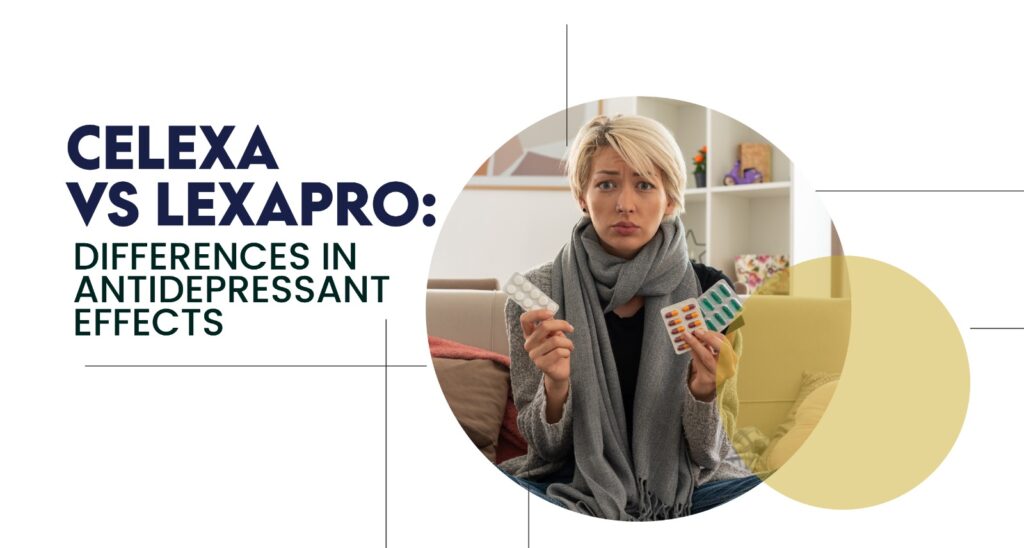
Understanding Celexa vs. Lexapro helps individuals and healthcare providers make informed decisions about depression and anxiety treatment. Both medications belong to the selective serotonin reuptake inhibitor (SSRI) class, which works by increasing serotonin availability in the brain. Despite their similar mechanisms, important differences in effectiveness, side effects, and dosing make each medication better suited for different individuals.
Celexa, the brand name for citalopram, received FDA approval in 1998 for treating major depressive disorder. Lexapro, containing escitalopram, gained approval in 2002 and represents a refined version of the original compound. This Celexa comparison reveals that Lexapro contains only the therapeutically active portion of citalopram, potentially offering similar benefits at lower doses.
This guide examines key differences between these medications, helping readers understand factors that influence treatment selection while emphasizing the importance of professional medical guidance.
Comparing the Effectiveness of Celexa and Lexapro
The effectiveness comparison between these antidepressants reveals nuanced differences that influence prescribing decisions. Both medications demonstrate proven efficacy for depression, though Lexapro’s effectiveness extends to FDA-approved treatment of generalized anxiety disorder, while Celexa’s anxiety applications remain off-label.

Clinical studies suggest that Lexapro may produce a faster onset of therapeutic effects compared to Celexa, with some patients experiencing improvement within one to two weeks, rather than the typical four to six weeks. This accelerated response may benefit individuals requiring rapid symptom relief.
Celexa vs Lexapro Effectiveness Comparison
| Factor | Celexa (Citalopram) | Lexapro (Escitalopram) |
| FDA-Approved Uses | Major depressive disorder | Major depressive disorder, generalized anxiety disorder |
| Onset of Action | 4-6 weeks typical | 1-4 weeks possible |
| Active Component | Racemic mixture (R and S enantiomers) | Pure S-enantiomer only |
| Potency | Standard SSRI potency | Higher potency per milligram |
| Response Rate | Approximately 60-70% | Approximately 60-70% |
| Off-Label Uses | Anxiety, OCD, panic disorder | OCD, panic disorder, social anxiety |
Both medications show comparable overall response rates, though individual responses vary significantly. Factors including genetics, concurrent medications, and specific symptom profiles influence which medication works better for each person.
Analyzing Celexa and Lexapro Side Effects
Understanding Celexa side effects and Lexapro side effects helps patients anticipate potential challenges and make informed treatment decisions. Both medications share common SSRI side effects, though frequency and severity may differ between the two.
Common side effects for both medications include nausea, dry mouth, drowsiness, insomnia, increased sweating, and sexual dysfunction. These effects often diminish as the body adjusts to medication, typically within the first few weeks of treatment.
Celexa side effects may include:
- Nausea and gastrointestinal discomfort
- Drowsiness or fatigue
- Dry mouth and increased thirst
- Sexual dysfunction including decreased libido
- Weight changes in some individuals
- QT prolongation at higher doses (cardiac concern)
Lexapro side effects commonly reported include:
- Nausea, particularly during initial treatment
- Headache and dizziness
- Insomnia or sleep disturbances
- Sexual side effects
- Fatigue or drowsiness
- Dry mouth
The Celexa comparison regarding cardiac effects reveals an important distinction. FDA warnings limit Celexa’s maximum dose to 40 mg daily due to dose-dependent QT prolongation risk, with further restrictions for certain populations. Lexapro carries lower cardiac risk at therapeutic doses.
Understanding Dosage Guidelines
Celexa dosage and Lexapro dosage differ significantly due to their pharmacological differences. Because Lexapro contains only the active enantiomer, it achieves therapeutic effects at lower milligram doses than Celexa requires.
| Dosage Parameter | Celexa (Citalopram) | Lexapro (Escitalopram) |
| Starting Dose | 20 mg once daily | 10 mg once daily |
| Typical Therapeutic Dose | 20-40 mg daily | 10-20 mg daily |
| Maximum Recommended Dose | 40 mg daily (20 mg for some populations) | 20 mg daily |
| Dose Adjustments | May increase after one week | May increase after one week |
| Elderly Patients | Maximum 20 mg daily | Maximum 10 mg daily recommended |
| Hepatic Impairment | Maximum 20 mg daily | Maximum 10 mg daily |
Both medications require gradual dose adjustments and should never be stopped abruptly due to discontinuation syndrome risk. Healthcare providers typically start at lower doses and increase gradually based on response and tolerability.
Lexapro dosage equivalence suggests that 10 mg of Lexapro provides approximately equal therapeutic effect to 20 mg of Celexa. This dosage relationship reflects the presence of only the active component in Lexapro versus both active and inactive components in Celexa.
Gathering Insights from Patient Reviews
Celexa reviews and Lexapro reviews provide valuable perspectives beyond clinical trial data, reflecting real-world experiences with these medications. Patient feedback reveals patterns in tolerability, effectiveness, and practical considerations that inform treatment expectations.
Common themes in Celexa reviews include:
- Effectiveness for depression with gradual improvement over weeks
- Generally well-tolerated with manageable side effects
- Sexual side effects reported as significant concern
- Weight neutrality appreciated by many patients
- Affordability as generic citalopram widely available

Lexapro reviews frequently highlight:
- Rapid onset of relief for some patients
- Effectiveness for both depression and anxiety symptoms
- Cleaner side effect profile reported by some users
- Sexual side effects remain common concern
- Higher cost than generic Celexa, though generic escitalopram available
Individual experiences vary widely, and reviews should not replace professional medical guidance. What works excellently for one person may prove ineffective or intolerable for another due to biological differences.
Factors Influencing Medication Selection
Choosing between Celexa and Lexapro involves considering multiple factors specific to each individual’s situation. Healthcare providers evaluate medical history, concurrent medications, specific symptoms, and practical considerations when recommending treatment.
Key selection factors include:
- Primary diagnosis (depression alone vs. depression with anxiety)
- Cardiac health and QT interval considerations
- Age and liver function affecting dosing
- Previous response to either medication
- Current medications and interaction potential
- Insurance coverage and cost considerations
- Individual sensitivity to side effects
Patients with cardiac conditions or those taking other QT-prolonging medications may be better candidates for Lexapro given the lower cardiac risk profile. Those primarily seeking depression treatment without significant anxiety may respond equally well to either option.
Generic availability affects cost significantly. Generic citalopram often costs less than generic escitalopram, making Celexa more accessible for uninsured or underinsured patients. However, if Lexapro provides better tolerability or effectiveness, the cost difference may be worthwhile.
Switching Between Medications
Some patients begin treatment with one medication and later switch to the other due to inadequate response, intolerable side effects, or changing clinical needs. Switching between Celexa and Lexapro requires medical supervision but typically proceeds straightforwardly given their similar mechanisms.
Direct switching at equivalent doses is often possible, though healthcare providers may adjust doses during transition. Monitoring during switches helps identify any unexpected responses or side effects requiring dose modification.
Factors prompting medication switches include:
- Insufficient symptom improvement after adequate trial
- Intolerable side effects not resolving with time
- Development of new health conditions affecting medication choice
- Changes in concurrent medications creating interactions
- Patient preference based on experience
Finding the Right Balance: San Francisco Mental Health Guides Your Treatment Journey
The celexa vs lexapro comparison reveals that both medications offer effective treatment options with distinct characteristics influencing individual suitability. Understanding these differences empowers patients to participate meaningfully in treatment discussions while recognizing that professional guidance remains essential for safe, effective medication management.
Antidepressant selection involves complex considerations beyond simple medication comparison. Individual biology, concurrent health conditions, lifestyle factors, and personal preferences all influence which medication provides optimal results with acceptable tolerability.
San Francisco Mental Health provides comprehensive psychiatric evaluation and medication management for individuals seeking treatment for depression, anxiety, and related conditions. Our experienced clinicians take time to understand each patient’s unique circumstances, ensuring treatment recommendations reflect individual needs rather than one-size-fits-all approaches. Contact San Francisco Mental Health today to schedule a consultation and discover how personalized psychiatric care can support your mental health journey.
FAQs
1. What are the key differences in effectiveness between Celexa and Lexapro?
Both medications demonstrate similar overall effectiveness for depression, though Lexapro holds FDA approval for generalized anxiety disorder, while Celexa’s anxiety use remains off-label. Lexapro may produce a faster onset of therapeutic effects in some patients due to containing only the active enantiomer of the compound.
2. How do the side effects of Celexa compare with those of Lexapro?
Both medications share common SSRI side effects, including nausea, sexual dysfunction, and sleep changes, with similar overall tolerability profiles. The most significant difference involves cardiac effects, as Celexa carries a dose-dependent QT prolongation risk, leading to maximum dose restrictions not required for Lexapro.
3. What are the recommended dosage guidelines for Celexa and Lexapro?
Celexa typically starts at 20 mg daily with a maximum of 40 mg, while Lexapro starts at 10 mg with a maximum of 20 mg daily. The lower Lexapro doses achieve equivalent therapeutic effects because the medication contains only the active component present in Celexa.
4. How do reviews of Celexa highlight its benefits and drawbacks compared to Lexapro?
Celexa reviews frequently emphasize its effectiveness for depression, generally good tolerability, and affordability as a widely available generic medication. Common drawbacks mentioned include sexual side effects and the gradual onset of therapeutic benefits requiring patience during initial treatment weeks.
5. What insights do Lexapro reviews provide about its efficacy and side effects compared to Celexa?
Lexapro reviews often highlight faster symptom relief for some patients and effectiveness for both depression and anxiety symptoms. While many users report a cleaner side effect profile, sexual side effects remain a common concern, and the cost may be higher than generic Celexa depending on insurance coverage.