


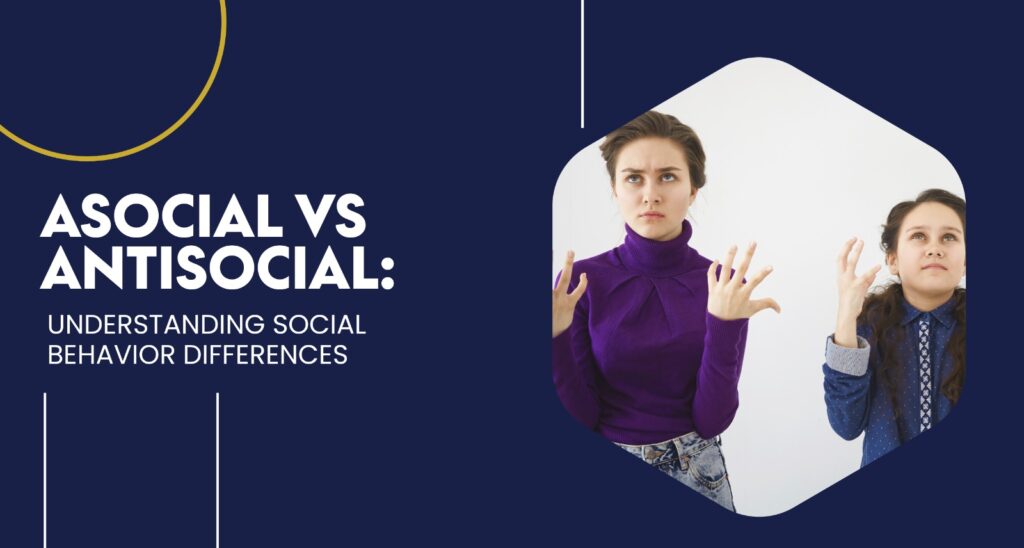
Understanding asocial vs antisocial behavior helps clarify commonly confused terms that describe vastly different approaches to social interaction. While everyday language often uses these words interchangeably, they represent distinct patterns with different motivations, impacts, and implications for mental health. Recognizing these differences enables more accurate self-understanding and appropriate responses when observing these behaviors in others.
Asocial behavior describes a preference for solitude and limited social interaction without hostility toward others. Antisocial behavior, conversely, involves patterns that violate social norms and disregard others’ rights and well-being. This fundamental distinction separates benign personality preferences from potentially harmful behavioral patterns requiring intervention.
This guide explores the differences between asocial and antisocial tendencies, examines related concepts including introversion and social anxiety, and provides strategies for maintaining healthy social connections.
The Nature of Introversion and Solitary Behavior
Introversion represents a personality trait characterized by a preference for solitary behavior and lower-stimulation environments. Introverts gain energy from quiet activities and alone time rather than social interaction. This trait exists on a spectrum, with most people displaying varying degrees of introverted and extroverted tendencies.
Solitary behavior in introverted individuals reflects genuine preference rather than fear or inability to connect. Introverts may enjoy meaningful relationships while requiring significant alone time to recharge. This non-social orientation differs fundamentally from social avoidance driven by anxiety or hostility.
Characteristics of healthy introversion include:
- Preference for deep conversations over small talk
- Need for solitude to process experiences and recharge
- Comfort with independent activities and solo pursuits
- Selective social engagement with close relationships
- Thoughtful communication style with considered responses
- Enjoyment of quiet environments and minimal stimulation
Understanding the Roots of Social Isolation
Social isolation occurs when individuals experience minimal contact with others, whether by choice or circumstance. Understanding why people become isolated helps distinguish between healthy solitude and problematic withdrawal that may require support.

Voluntary social isolation in asocial individuals stems from a genuine preference for limited interaction. These individuals function contentedly with minimal social contact, experiencing neither distress about their solitude nor desire for increased connection. Their lack of interaction reflects temperament rather than disorder.
Involuntary social isolation results from barriers preventing desired connection. These barriers may include social anxiety, depression, physical limitations, geographic factors, or life circumstances that reduce social opportunities. This form of isolation often causes distress and negative health outcomes.
Asocial vs Antisocial Behavior Comparison
| Characteristic | Asocial Behavior | Antisocial Behavior |
| Motivation | Preference for solitude | Disregard for others’ rights |
| Attitude Toward Others | Neutral or indifferent | Often hostile or manipulative |
| Social Norms | Generally follows rules | Frequently violates norms |
| Harm to Others | Does not harm others | May exploit or harm others |
| Emotional Response | Content with limited interaction | May lack empathy or remorse |
| Treatment Need | Usually none required | Often requires intervention |
Social Anxiety and Its Impact on Interaction
Social anxiety significantly impacts interaction patterns, creating withdrawn behavior that may resemble asocial tendencies but stems from fear rather than preference. Individuals with social anxiety desire connection but experience intense fear of judgment, embarrassment, or rejection that prevents comfortable social engagement.
This condition creates a painful paradox where longing for connection coexists with avoidance of social situations. The anticipatory anxiety, physical symptoms, and negative self-evaluation associated with social anxiety make interaction feel threatening rather than rewarding.
Social anxiety symptoms affecting interaction include:
- Intense fear of judgment or negative evaluation
- Physical symptoms including sweating, trembling, and rapid heartbeat
- Avoidance of social situations despite desire for connection
- Excessive worry before and after social encounters
- Difficulty speaking or maintaining conversation
- Fear of being observed or becoming center of attention
Understanding social anxiety helps distinguish between those who prefer solitude and those who suffer from anxiety-driven avoidance requiring treatment.
The Link Between Withdrawn Behavior and Social Isolation
Withdrawn behavior describes observable patterns of reduced social engagement, limited communication, and preference for isolation. This behavior may indicate various underlying causes ranging from normal introversion to clinical conditions requiring professional attention.
Recognizing when withdrawn behavior signals problems helps identify individuals who may benefit from support. Sudden changes in social patterns, withdrawal accompanied by mood changes, or isolation causing functional impairment warrant concern and potential intervention.
Causes and Implications of Withdrawn Behavior
| Cause Category | Examples | Level of Concern |
| Personality Trait | Introversion, asocial preference | Low – normal variation |
| Temporary Circumstances | Grief, stress, life transitions | Moderate – may resolve naturally |
| Social Anxiety | Fear of judgment, avoidance patterns | Moderate to High – treatment helpful |
| Depression | Loss of interest, energy depletion | High – treatment recommended |
| Antisocial Patterns | Isolation for harmful purposes | High – intervention needed |
| Trauma Response | Protective withdrawal after adverse experiences | High – professional support beneficial |
Identifying Anti-Social Tendencies in Daily Life
Anti-social tendencies involve patterns that disregard social norms and others’ rights, distinguishing this behavior from simple preference for solitude. Identifying these patterns helps recognize when behavior crosses from benign withdrawal into potentially harmful territory.
Antisocial behavior patterns include persistent lying, manipulation, aggression, disregard for safety, and lack of remorse for harmful actions. These tendencies often emerge in adolescence and may indicate antisocial personality disorder when pervasive and persistent.
Warning signs of antisocial tendencies include:
- Repeated violation of rules without apparent concern
- Deceptive behavior for personal gain or pleasure
- Impulsivity and failure to plan ahead
- Irritability and aggressiveness toward others
- Reckless disregard for safety of self or others
- Consistent irresponsibility in work or relationships
- Lack of remorse after harming others
The asocial vs antisocial distinction becomes critical here, as asocial individuals simply prefer solitude while antisocial individuals actively engage in harmful behaviors regardless of their social preferences.
Coping Strategies for Introversion and Social Anxiety
Developing effective coping strategies helps introverts honor their temperament while maintaining necessary connections, and assists those with social anxiety in building confidence for social engagement. Different approaches suit different underlying causes of social withdrawal.

For introverts, strategies focus on balancing solitude needs with relationship maintenance. Scheduling social activities with recovery time, choosing quality interactions over quantity, and communicating needs to loved ones helps maintain connections without exhaustion.
For social anxiety, strategies address fear reduction and skill building. Gradual exposure to feared situations, cognitive restructuring of negative thoughts, and relaxation techniques reduce anxiety while building confidence through successful experiences.
Effective coping approaches include:
- Setting realistic social goals aligned with personal needs
- Practicing self-compassion regarding social preferences
- Building small, meaningful connections rather than large networks
- Developing communication skills through gradual practice
- Using relaxation techniques before challenging situations
- Seeking professional support when anxiety significantly impairs functioning
Building Bridges to Connection: San Francisco Mental Health Supports Your Social Wellbeing
Understanding asocial vs antisocial behavior clarifies important distinctions that inform self-understanding and guide appropriate responses to different social patterns. Whether you identify as introverted, struggle with social anxiety, or observe concerning behaviors in loved ones, accurate understanding enables better decisions about when professional support may help.
Healthy social functioning looks different for everyone, and there is no single correct level of social engagement. However, when social patterns cause distress, impair functioning, or harm others, professional guidance can make meaningful differences in quality of life and relationships.
San Francisco Mental Health provides comprehensive assessment and treatment for individuals navigating social anxiety, isolation concerns, and related challenges. Our experienced clinicians understand the nuances of social behavior and offer personalized approaches that respect individual differences while addressing problematic patterns. Contact San Francisco Mental Health today to discover how our compassionate team can support your journey toward comfortable, fulfilling social connections.
FAQs
1. What are the differences between social isolation and solitary behavior in introverted individuals?
Social isolation implies separation from others that may cause distress or negative outcomes, while solitary behavior in introverts represents a positive preference for alone time that supports wellbeing. Introverts engaging in solitary behavior typically maintain some meaningful relationships and feel content with their level of social interaction.
2. How does social anxiety contribute to a lack of interaction and withdrawn behavior?
Social anxiety creates intense fear of judgment and negative evaluation that makes social situations feel threatening, leading to avoidance despite desire for connection. This anxiety-driven withdrawal differs from asocial preference because individuals with social anxiety typically want more interaction but feel unable to engage comfortably.
3. What factors can lead to non-social and anti-social tendencies in daily life?
Non-social tendencies often stem from introverted temperament, past negative social experiences, or current life circumstances requiring solitude for recovery or focus. Anti-social tendencies involve different factors including childhood adversity, neurobiological differences, and environmental influences that shape disregard for social norms and others’ wellbeing.
4. How can one recognize the signs of social isolation linked with withdrawn behavior?
Signs include declining invitations consistently, reduced communication with previously close contacts, spending excessive time alone, and expressing loneliness or disconnection despite avoiding social opportunities. Concern increases when withdrawal accompanies mood changes, functional impairment, or significant deviation from previous social patterns.
5. What coping strategies are effective for managing introversion and social anxiety to foster better social connections?
Effective strategies include setting realistic social goals respecting personal energy limits, practicing gradual exposure to anxiety-provoking situations, and building skills through small successes. Seeking professional support helps when self-directed strategies prove insufficient, particularly for social anxiety significantly impacting quality of life.