

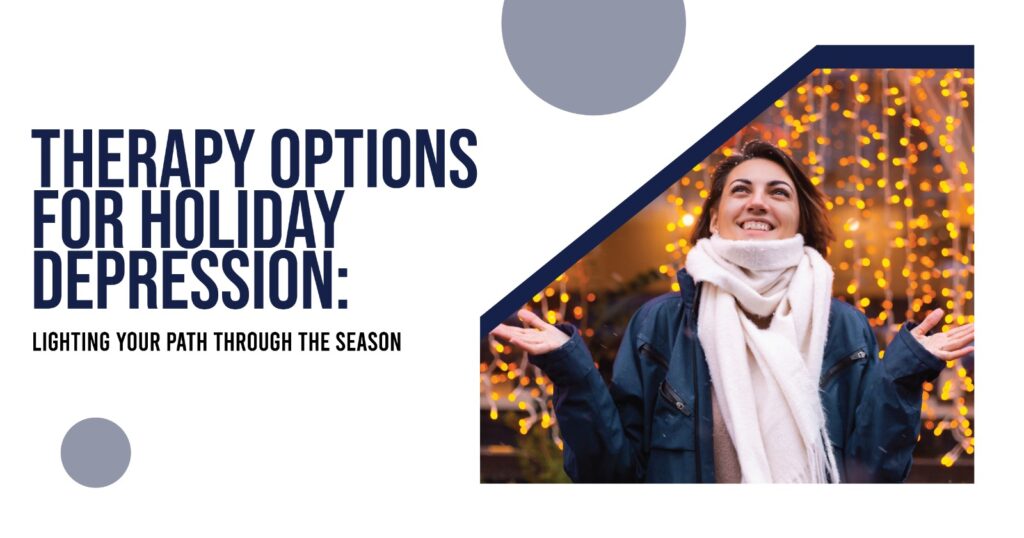
The twinkling lights and festive music should spark joy, but for many, the holidays arrive with a quiet ache that makes every celebration feel forced and exhausting. Therapy options for holiday depression become essential when the pressure of perfect gatherings, financial strain, and resurfacing grief transform what should be a season of connection into one of isolation. Holiday depression affects millions, blending seasonal affective disorder with emotional triggers that make even simple traditions feel overwhelming. This blog offers compassionate, practical guidance through cognitive behavioral therapy for holiday depression, mindfulness therapy for holiday stress, group counseling during holidays, teletherapy for seasonal depression, grief counseling for holiday losses, seasonal affective disorder treatment options, stress management techniques for holidays, and support groups for holiday depression – helping you find light even on the darkest days.
Therapy Options for Holiday Depression That Bring Calm and Connection
Therapy options for holiday depression provide tailored pathways that address both the biological and emotional components of seasonal struggles, creating space for healing amid the chaos. Whether through structured thought-challenging or gentle presence practices, these approaches meet individuals where they are, offering tools that fit into busy holiday schedules while building resilience for the long winter ahead.
Cognitive Behavioral Therapy for Holiday Depression
Cognitive behavioral therapy for holiday depression works by identifying the specific thought patterns that amplify seasonal sadness – such as “everyone else is happy except me” or “I’m failing at the holidays” – and gently replacing them with more balanced perspectives. The process begins with mood tracking to reveal how certain activities or social media exposure trigger depressive spirals, then moves into behavioral activation that encourages small, achievable pleasure activities like listening to favorite music or taking a short walk. Thought records become powerful tools for examining evidence behind negative beliefs, while graded exposure helps individuals face overwhelming social situations in manageable steps. The structured nature of CBT provides measurable progress that counters the hopelessness common during holiday depression.

Key CBT techniques include:
- Thought records to challenge “perfect holiday” myths.
- Behavioral activation with one joy activity daily.
- Graded exposure starting with small gatherings.
- Strengths focus listing personal holiday wins.
The table below outlines key CBT techniques for holiday application:
| Technique | Holiday Application | Daily Practice | Expected Benefit |
| Thought Records | Challenge “perfect holiday” myths | 3 entries per day | Reduced self-criticism |
| Behavioral Activation | Schedule one joy activity | Morning planning | Increased dopamine |
| Graded Exposure | Start with small gatherings | Weekly progression | Lower social anxiety |
| Strengths Focus | List personal holiday wins | Evening reflection | Improved self-worth |
Mindfulness Therapy for Holiday Stress
Mindfulness therapy for holiday stress teaches individuals to observe their thoughts and emotions without judgment, creating mental space between trigger and reaction that prevents small frustrations from escalating into full depressive episodes. The practice begins with simple breath awareness – four counts in, seven hold, eight out – that can be done anywhere from crowded stores to tense family dinners. Body scans help release physical tension stored in the shoulders and jaw from holiday pressures, while loving-kindness meditation directed toward difficult relatives softens resentment. Regular practice reduces cortisol levels by up to 25% and improves sleep quality, countering the exhaustion that feeds depression.
Group Counseling and Support Groups During Holidays
Group counseling during holidays offers the powerful medicine of shared experience, where hearing “I feel that too” from others battling similar struggles instantly reduces the sting. Support groups for holiday depression create safe spaces to process complicated emotions about family dynamics or financial stress without fear of judgment. The peer connection builds accountability for self-care practices while providing practical coping strategies that have worked for others. Virtual groups remove travel barriers, making consistent attendance possible even on busy December nights.
Teletherapy for Seasonal Depression
Teletherapy for seasonal depression brings professional support directly into homes through secure video platforms, eliminating transportation challenges during bad weather or packed schedules. The convenience of logging on from your bedroom after the children sleep makes consistent therapy possible when in-person sessions feel impossible. Therapists can share screens for mood tracking apps or guided meditations, creating interactive experiences that feel personal despite the digital medium. Research shows teletherapy matches in-person effectiveness for depression treatment while increasing attendance rates.
Grief Counseling for Holiday Losses
Grief counseling for holiday losses acknowledges that celebrations can intensify absence, creating rituals that honor loved ones while allowing space for both sorrow and joy. Therapists help clients create memory practices like lighting a special candle or sharing stories that keep the connection alive without forcing cheer. The work addresses complicated grief when traditions trigger fresh waves of pain, teaching individuals to hold multiple emotions simultaneously. Support groups specifically for holiday bereavement provide peer understanding that family members may struggle to offer.
The table below details grief counseling approaches for holiday healing:
| Approach | Holiday Integration | Emotional Focus | Practical Tool |
| Memory Rituals | Special candle with tree | Honoring presence | Photo display |
| Story Sharing | One memory per night | Processing loss | Recorded messages |
| Meaning Making | Charity in their name | Transforming pain | Volunteer activity |
| Empty Chair | “Talk” to loved one | Expressing unsaid | Letter writing |
Seasonal Affective Disorder Treatment Options
Seasonal affective disorder treatment options combine light therapy, medication when needed, and behavioral strategies to combat winter’s biological impact on mood. Light boxes delivering 10,000 lux for 30 minutes each morning mimic natural sunlight, boosting serotonin production that counters depressive symptoms. Dawn simulators gradually brighten bedrooms like a natural sunrise, improving morning mood and energy. Vitamin D supplementation addresses deficiencies common in winter months, while consistent exercise outdoors captures whatever daylight exists.
Stress Management Techniques for Holidays
Stress management techniques for holidays create breathing room amid endless obligations, preventing the complete depletion that feeds depression. The 4-7-8 breathing method calms nervous systems in moments, while progressive muscle relaxation releases physical tension stored from holiday pressures. Worry postponement designates specific times for anxious thoughts rather than letting them dominate every moment. Boundary setting with family about time and energy prevents resentment that amplifies depressive feelings.

When to Seek Help: Support Lines, Therapists, and Community Resources
Seek help when holiday depression persists beyond two weeks, interferes with daily functioning, or includes suicidal thoughts. Crisis lines offer immediate support—988 connects to trained counselors 24/7. Local therapists provide holiday-specific sessions, while community groups offer peer understanding.
San Francisco Mental Health: Your Holiday Light Through Darkness
When holiday shadows fall, expert therapy ignites hope. At San Francisco Mental Health, we illuminate therapy options for holiday depression with cognitive behavioral therapy for holiday depression, mindfulness therapy for holiday stress, and group counseling during the holidays. From teletherapy for seasonal depression to grief counseling for holiday losses, we’re here. Contact San Francisco Mental Health today to learn more or schedule your light. Your brighter season awaits.
FAQs
1. What are effective cognitive behavioral therapy techniques for managing holiday depression?
Effective CBT techniques include thought records to challenge “everyone’s happier” distortions, behavioral activation scheduling one joy activity daily, and cognitive restructuring for perfectionism. Graded exposure starts with small gatherings to build tolerance. Weekly homework tracks progress and prevents relapse.
2. How can mindfulness therapy help with holiday stress management?
Mindfulness therapy teaches present-moment awareness through body scans and breath focus, reducing rumination on past holiday “failures” or future worries. It lowers cortisol 25% with 10-minute daily practice. Loving-kindness meditation fosters compassion for difficult relatives.
3. What are the benefits of group counseling and support groups during the holiday season?
Group counseling normalizes struggles (“others feel this too”), provides peer coping strategies, and reduces isolation through shared experiences. It’s cost-effective and offers accountability via weekly check-ins. Holiday-themed sessions address specific triggers like family gatherings.
4. How does teletherapy assist individuals coping with seasonal depression?
Teletherapy provides flexible scheduling around holiday chaos, privacy from home, and access to SAD specialists nationwide. It removes travel barriers during bad weather. Text check-ins between sessions offer immediate support.
5. What grief counseling options are available for dealing with holiday losses?
Options include meaning-making rituals (memory candles), empty chair technique to “talk” to loved ones, and complicated grief therapy for stuck emotions. Holiday-specific support groups share coping strategies. Online platforms offer 24/7 access for acute moments.


